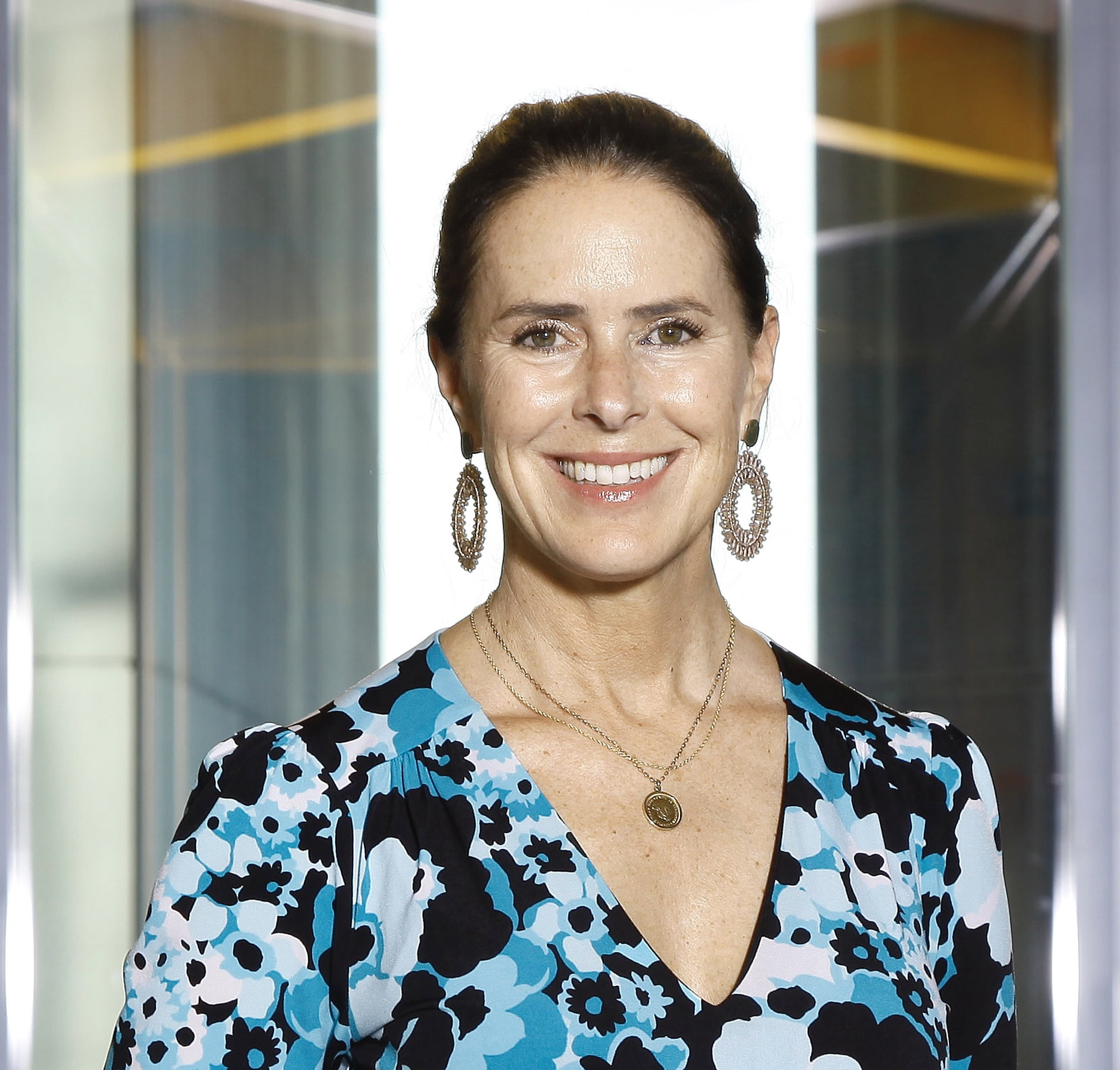
“Never a dull moment”
Susan Poot, Group Chief Risk Officer, Virgin Money, joins us for a Q&A to share the main challenges at the forefront of risk management teams today.
2023 has kicked off with big events that sent huge ripples across the finance sector. On top of that, the existing tensions caused by geopolitical events have not subsided. We speak to Virgin Money’s Group Chief Risk Offer Susan Poot about the risks that have been brought to the forefront and examine the warning signs that these events are triggering.
Gosh, so much has happened. This has been a really volatile year. The mini budget was really disruptive and also triggered some doubts (about the UK’s financial and political stability) among the international investor community.
The Russian war on Ukraine is still going, which was one of the triggers of inflation. Inflation and interest rates in the UK have been higher and the economic growth prospects have been more negative when compared to the rest of Europe. However, the (relative) macro-economic performance and outlook have been subject to considerable volatility.
On top of the above mentioned (geo-)political and economic challenges, there are also new regulations, like enhanced fraud regulations and consumer duty. Although the intention of the consumer duty regulations is good – it is a big regulation to implement and to evidence. There are consequences, we can’t fully oversee yet. In view of the cost of living crisis, the UK Government has taken the initiative to outline principles and guidelines for mortgage lenders, captured in the ‘Mortgage Charter’. Banks are still working through what this means from a process, customer service, consumer duty, modelling, etc. perspective. Similarly, there are principles being outlined with regards to deposit rates.
There is a risk that the regulatory, political, and economic environment in the UK makes banks less attractive for (international) investors.
When looking back at the past months, a key event was the collapse of Silicon Valley Bank which triggered a crisis in the US regional banking sector. Although international markets got a bit jittery, concerns on a potential international banking crisis were not justified. Although the (already existing) concerns regarding Credit Suisse did seem to be amplified leading to the accelerated take-over by UBS. But what SVB and other banks showed us, was how incredibly quickly deposits can leave a bank. Thanks to digital banking, if customers lose trust in their bank – even if just based on rumours, they don’t need to give the bank the benefit of the doubt or wait for further clarity. Why should they? They can just simply move their money in a matter of minutes to a different bank.
This raises questions around target liquidity cover ratios and the validity of behavioural models that might need to be revisited. These are the things that come to mind for me when I look back over the last year.
I’ve been in risk management now for so many years – the risk function is hugely interesting. There’s never a dull moment as there is always some area of risk to focus on and sometimes multiple areas at the same time. There’s a lot going on right now in multiple areas.
Typically, credit risk management in most banks is mature. It’s quite mature because this is what we’ve been doing ever since banking started. However, this area remains a core focus thanks to new developments such as AI and use of more advanced models. But then there was the Covid-19 disruption, which (temporarily) undermined the working of models. Even now, we’re in an unusual situation where inflation is high, the economy quite stagnant, while employment remains strong. With the cost of living crisis, it is hard for many people to make ends meet, nevertheless, the (retail) credit books are generally strong because one of its key drivers - unemployment - is low. Given the unique and challenging market conditions, there is enhanced monitoring of these books and of early warning signals.
From a modelling standpoint, as mentioned, we’ve already had a disruption with Covid-19. All banks did post-model adjustments to fit the Covid-19 situation. And it looks like models may face hard times again with the high inflation and strong employment scenario, while new regulations around mortgages are coming by means of the ‘Mortgage Charter’. If banks are required to give all mortgage customers the right to extend the terms of their mortgages or ask for interest only without affecting their credit score, the question will be the impact on models and their predictive ability.
So in summary, I am focused on credit risk, model risk, market disruption and financial/liquidity risk. Fraud risk is also an area of focus given the increasing sophistication of fraudsters and the fact that most banks have signed up to the Contingent Reimbursement Model Code and there’s new regulations around it. Lots of things to consider here.
The ones I’ve been highlighting are very much topical right now, and I’m still sleeping rather well, thanks to having the financial strength and good team in place to cope with the challenges.
But what’s pressing now is the consumer duty regulation. Banks are required to be significantly compliant by the end of July, so everyone’s working really hard on that. Then the banks will be assessed, and whether you are or are not compliant probably depends on the average of where the market is. The administrative pressure on banks is going to be significant as the regulator is expected to issue a lot of information requests to assess the level of compliancy across the industry.
Managing all risks in your book and living up to the expectations of new regulations put quite a lot of pressure on banks. For the rest of the year, in the short term, this is going to be challenging.
Next year is just around the corner, I think these risks will stay on the radar.
For many years, AI developments have been an emerging risk, because so many non-banks and fintechs were coming in, but I don’t think we’re as worried now. We just need to keep up with the developments because you can’t carry on banking the old way with everything that’s possible out there. You need to find resources and capacity to invest in AI.
For financial crime, fraud and cyber, it is important to stay ahead because criminals look for the weakest links to exploit.
Of course, climate risk has been on the emerging list for a while and it will remain there. It hasn’t got less urgent because the outlook on climate is not getting better. It’s quite alarming that global targets don’t look achievable within the agreed timeframes. Climate risk will remain an emerging (and potentially) increasing risk.
Managing all risks in your book and living up to the expectations of new regulations put quite a lot of pressure on banks.
It’s important that we promote and put targets around equality. I’m a strong believer that if you put effort into it, you can do it. I’ve been in Virgin Money for one and a half years now, and my leadership team is now 50% female and 20% ethnically diverse which it wasn’t when I took over. I’ve been lucky to be able to restructure and fill some vacancies, but if I didn’t commit myself to it, it would’ve been easier to stay the way we were.
Diversity of thinking is really important and you miss a whole lot of talent if you have predominantly male (or predominantly female) teams.
It is important to lead by example. I am proud to be part of an organisation where the leadership team, the board, and the executive committee at Virgin Money have a really strong female presence (about 50%). We are continuing to focus on female inclusion and have also set targets on other measures of inclusion and diversity such as LGBTQ+ and ethnic diversity. Progress is measured and is followed up on.
I like hearing from peers and others in the industry, so it’s useful to be present at some of these discussions. We’re all dealing with similar challenges, for example around regulations, so you have an opportunity to talk to peers and industry experts about joint challenges and network a bit. I really enjoy that.
I know the regulators typically come in as well, and although we speak on a regular basis, it’s also interesting to hear from them in a different setting. I’d also like to see new advancements and new things happening in the topics I highlighted here – credit risk, model risk, geopolitical risk, fraud, and more.
13 - 16 November 2023
InterContinental O2, London
Find out more