3 reasons why ESG strategies are so hard to get right
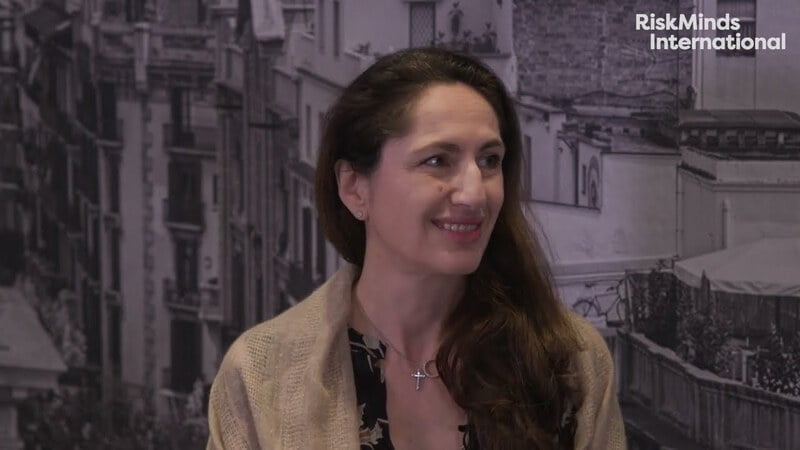
Valerie Villafranca, Head of ESG Operational Transformation, Societe Generale, uncovers the real challenges and dilemmas with climate risk management.
Beyond the incoming regulations, consumer expectations, and public commitments to curb climate change, the pressure to implement ESG strategies is mounting. However, getting it right is seemingly an impossible task. In an interview, Valerie Villafranca, Head of ESG Operational Transformation, Societe Generale, reveals three key challenges to be aware of and to keep in mind.
When you think about all the things that ESG encompasses, the difficulty of the challenge becomes clear. It affects every stakeholder, from your clients to your leadership, and it changes what you do as a company.
“It is a real paradigm shift regarding everything we are – our inner identity as a bank, our purpose.” – Villafranca said.
This means that when making the positive changes internally, ESG teams are required to explore and define what it means to become more environmentally and socially responsible in all risk departments and beyond.
You need to talk and to discuss with everybody. You need to talk non-financial risk people, operational risk, compliance risk, liquidity risk, market risk, credit risk, model risk management… You need to take to talk to the finance department, obviously to all LoD1, and therefore you have a huge amount of people in front of you just to manage.
Risk, especially on the quantitative side, relies on data. Historical data is used to model future probabilities; however, climate risk is not well-established enough to understand possible future events with confidence.
When we look at past history, we have none.
But data is necessary in order to measure the progress of the strategy and to set targets to aspire to. The solution is not ideal.
“We need to take forecast from scientists.” – Villafranca explained.
With ESG in such an early development, it needs to catch up with other more mature departments in processes and resources. For example, procedures for what happens with financial data is well-established, and the people involved in handling it are specialised in that field.
“Carbon accounting is really at its infancy.” – Villafranca said.
Because of that, mistakes are easy to make, and the numbers become unreliable. How can you calculate your exposure to the oil and gas sector if you can’t calculate emissions confidently? Could you generate a P&I?
“We don't have enough people trained in carbon accounting” – Villafranca said.
“From my perspective, unlocking the carbon accounting piece is really the key for everybody to progress because unless you can measure something, you cannot manage it. And right now, we are trying to manage something that in fact we cannot measure.”