In the past two decades, the agricultural industry has witnessed a dramatic shift from traditional field-based farming to soilless growing systems. This transition has been driven by a combination of factors, including the unpredictable impacts of climate change, water scarcity, the rise of soilborne pathogens, dwindling arable land and escalating labour costs.
Soilless systems, which rely on organic or inert substrates such as peat moss, coconut coir, stone wool and perlite, offer a promising solution. These highly engineered materials are carefully selected to support optimal plant growth in hydroponic and indoor environments, where precise physical, chemical and nutritional conditions are critical for cultivating healthy crops.
But while traditional soil science and the intricate network of microorganisms in outdoor farming have been well-documented for their role in plant health and ecosystem resilience, the microbiome in soilless systems remains less understood. A recent white paper explores the key materials used in soilless plant cultivation within indoor agriculture and underscores the importance of the substrate microbiome. These highly automated and controlled environments still host a complex array of microorganisms, whose diversity is crucial for ensuring productive and resilient indoor farming systems.
The paper—CEA substrates and the plant microbiome—presents preliminary findings from a collaboration between Jiffy Group and Concert Bio, which assessed microbiome diversity across various substrates. By leveraging Concert Bio’s global data collection from controlled environment agriculture (CEA) growers, this research aims to spark further investigation and conversations surrounding the substrate microbiome.
Understanding the microbiome Plants, like humans, rely on their own microbiome for health and growth. Research has shown that a plant's microbiome helps it grow, resist
disease and endure droughts, among other vital functions. In fact, plants cannot grow in a sterile environment, even under perfect conditions, as microbes are crucial to their survival.
The root microbiome is particularly important. While CEA systems, even in sanitized conditions, still contain enough microbes to allow plant growth, many of the essential soil microbes are missing. In these soilless systems, substrates—especially organic ones—have become a primary source of microbes for plants, playing a key role in supporting their health.
According to Dr. Kyle Freedman, global segment manager CEA with Jiffy Products International, while CEA systems can allow for plants to be grown in the ground (which is common in the case of lower tech high tunnels or plastic greenhouse), most CEA systems that manipulate environmental factors with precision are done in higher tech greenhouses and vertical farms.
Dr. Kyle Freedman, global segment manager CEA,Jiffy Products International
“Here, soilless growing media is essential in order to mimic the environment that plants naturally have when growing in the soil. Growing in soilless substrates also enables greater precision and management to enhance plant growth and development as soilless substrates are highly engineered to achieve optimal conditions for plants,” Freedman explains. “With soilless growing media we can provide the optimal amount of air, water and nutrients to achieve desired results, something that is very difficult to do in conventional soil cultivation and includes many more factors that cannot be adjusted without increased chemical or mechanical intervention.”
The plant microbiome in indoor agriculture In soilless systems, microbiomes are typically smaller and less diverse compared to those found in soil. This limited diversity makes the microbiome even more influential in hydroponic systems, as small shifts in the microbial community can lead to significant impacts on plant health. In CEA, sterilization measures, while useful in suppressing disease, can make the microbial community more vulnerable by reducing its diversity and increasing the potential for pathogen intrusion.
The white paper notes that within CEA systems, there are four microbiomes of particular interest: the root microbiome, the leaf microbiome, the nutrient solution microbiome and the substrate microbiome. Concert Bio has extensively studied these microbiomes across various hydroponic systems; among these, the root microbiome is the most crucial. The company notes that microbes that inhabit the rhizosphere (the surface of the root) and endophytic microbes (microbes inside the root) have the most direct and significant impact on plant health. Plants actively control which microbes reside on their roots, selectively attracting certain species by releasing sugars and chemicals to ‘recruit’ beneficial microbes. This selective process, well-documented in soil, is similarly observed in soilless systems, as confirmed by Concert Bio’s research.
The substrate microbiomeThe first source of microbes plants typically come into contact with is the substrate they are growing in, often before having much contact with the nutrient solution. For example, leafy greens are often germinated in a plug, while vine crops are commonly grown in larger substrate blocks. Because substrates are the first point of contact for plants, the microbes present in these materials get a "first mover advantage" in colonizing plant roots and influencing growth.
“The substrate or growing media used is one of the most important influential factors in a CEA hydroponic system,” says Freedman. “Because the environment in these systems is highly controlled and closed off to most of the outside world, there are few opportunities for microbes to enter these systems. Growing media and substrate are the main one, followed by water and seeds. So, understanding the microbiome of substrates is critical in order to assess the benefits and even risks that may arise during production. The substrate type is critical, as well as how it may be processed or treated prior to being used in a system.”
Microbes in the substrate often play a pivotal role in plant health. For instance, peat, a commonly used substrate, contains more plant-adapted microbes compared to the nutrient solution. Additionally, different organic substrates have distinct microbiomes. Concert Bio’s research has shown that coco pith tends to have the highest bacterial diversity, while peat supports greater fungal diversity.
“The substrate microbiome varies significantly between different kinds of substrates,” says Dr. Paul Rutten,
founder and CEO of Concert Bio. “Peat for example typically contains a much richer and more diverse microbiome than an inert substrate like stone wool.”
Dr. Paul Rutten, founder and CEO,Concert Bio
Substrates, he adds, particularly organic substrates, are often the main source of microbes entering CEA systems. “Inorganic and inert substrates like stone wool, Nygaia and Growfoam often arrive with little to no microbes present because their production often creates sterilizing conditions. However, our microbiome monitoring with growers has shown that they 'fill up' with microbes once they are being used in a CEA system. Different inert substrates create a home for different kinds of microbes, so you'll see a different microbiome develop in these substrates during plant growth,” Rutten explains.
Recently, the indoor agriculture industry has been exploring the use of new fibers and materials to enhance sustainability. However, many of these alternative substrates are inorganic or only partially organic, offering fewer microbes for plants to interact with. This shift toward less biologically diverse materials could significantly reduce the microbial diversity available to plants, with potential consequences for the health and resilience of the root microbiome.
“We see that components like peat, coconut coir, and wood fiber materials are the most diverse in their microbial content,”: says Freedman. “Peat is harvested from an aquatic bog so that makes sense based on its environment. Coconut coir is a byproduct of the fruit, but has its own microbiome and processing steps needed to make it a finished substrate product. Wood products often undergo a heating element in the case of wood fiber or decomposition in the case of bark. In all of these, we know there could be a risk that pathogens are present (like in conventional soil), however due to their properties, how they are processed, and the beneficial microbes they come with, the effect or risk they can have on plant or human health is very little.”
The microbiome in soilless cultivationFor years, indoor agriculture growers have aimed to control microbial populations within their systems, just as they manage other critical factors such as light, CO2 levels, and insect ecosystems. Since the early 2000s, studies, particularly from Wageningen University & Research in the Netherlands, have demonstrated that maintaining the right microbiome can significantly enhance plant growth, health, flavour and shelf life in indoor agriculture.
To effectively manage plant microbiomes and sustain a healthy microbial community, growers need the ability to monitor and modify their systems. Advances in DNA sequencing have made this possible, drastically reducing the costs and making regular microbiome analysis accessible. While microbiome analysis has been widely adopted in soil-based agriculture, Concert Bio has pioneered a similar service for soilless systems. Unlike traditional methods like qPCR and plate-based testing, DNA sequencing can identify all microbes, including both harmful pathogens and beneficial organisms. It also provides detailed insights into the microbiome's diversity, functionality, and the balance between beneficial and pathogenic microbes.
Concert Bio explains that until recently, knowledge of microbiomes in soilless indoor agriculture systems was limited. However, DNA sequencing is now revealing crucial information that allows growers to proactively enhance microbiomes. One promising approach is the intentional addition of beneficial microbes that may be absent or underrepresented in current CEA systems—the soil microbiome can be "transplanted" into hydroponic systems, introducing vital microbes that plants typically derive from soil. Concert Bio’s research has shown that adding a healthy microbial community to an inert substrate can significantly increase yield. While organic substrates showed higher yields than inert ones with added microbes, adding beneficial microbes to organic substrates can further boost yield. In all cases, enhancing the microbiome yields positive results.
“The general CEA community has little understanding on the microbiome, how some microbes can outcompete others, what functions they play in promoting plant resilience, etc.,” notes Freedman. “We need to better understand this complex environment of microbes, not just in growing media, but also water and seeds. One common approach is to try and sterilize or kill everything in a CEA system to reduce or ‘eliminate’ risk. However, we know, like our own human microbiome (the gut microbiome for example) that killing everything and resetting that environment can have deleterious affects we often don’t foresee.
“We need to gain knowledge of this environment and topic first, then understand how to manipulate it if needed,” adds Freedman. “In addition, sterile or inert growing media do not contain a microbiome and can be reducing the potential benefits for growers while believing that being microbe free is of the highest value. I think sterile/inert media has its place and some value, but it can also benefit from microbial inoclulation, something Dr. Rutten and the Concert Bio team are passionate about for all types of growing media.”
As such, transplant experiments are not yet commercially viable due to the complex nature of microbial communities, and consistent results are difficult to achieve. Mass-producing a stable microbiome product with hundreds or thousands of species remains challenging. As a solution, Concert Bio is using AI modeling to identify key beneficial microbes, narrowing the focus to a few species—or even a single species—that can substantially improve the microbiome in hydroponic systems. Their efforts aim to create a reliable and scalable solution to improve crop yields in controlled environments.
“No matter how much we try and create sterile CEA environments, plants cannot grow without microbes, and they will always find a way to enter the system,” says Freedman. “If we do not learn how to grow with them, and leverage them in many cases, we open the door for pathogens to take over as there are no other microbes to compete for essential nutrients and food sources. Survival of the fittest, and a world where pathogens are the only ones fit, means they survive.” ●
In soilless systems, microbiomes are typically smaller and less diverse compared to those found in soil.
ISO Horti, a specialist in horticultural robotics and automation, and TTA, experts in transplanting and sorting solutions, have merged. Operating under the name TTA-ISO, this partnership directly addresses the demand for automation in global horticulture and food production.
TTA-ISO states it envisions a promising future for horticulture, with annual sector growth projected at eight to 10 percent. Leveraging their innovative tech and AI-driven vision solutions, they focus on expanding in the Americas, Middle East and Oceania, while exploring opportunities in global food markets and the carbon and fibre industries.
This merger centres on bringing together R&D resources, accelerating automations to market, and offering clients a broader range of products and services, notes the new entity.
“Bringing TTA and ISO together allows us to meet the surge in demand for innovative automation,” said Jan Bakker, CEO of TTA. “Our combined expertise helps growers worldwide increase productivity, improve yields and grow more sustainably."
Added Martin Maasland, CEO of ISO: “This merger empowers us to help our customers push boundaries, transform their operations, and achieve the extraordinary. By optimizing their processes and enabling more efficient use of resources, we’re reducing waste and environmental impact – vital for the sector’s future and a powerful opportunity to shape horticulture worldwide.
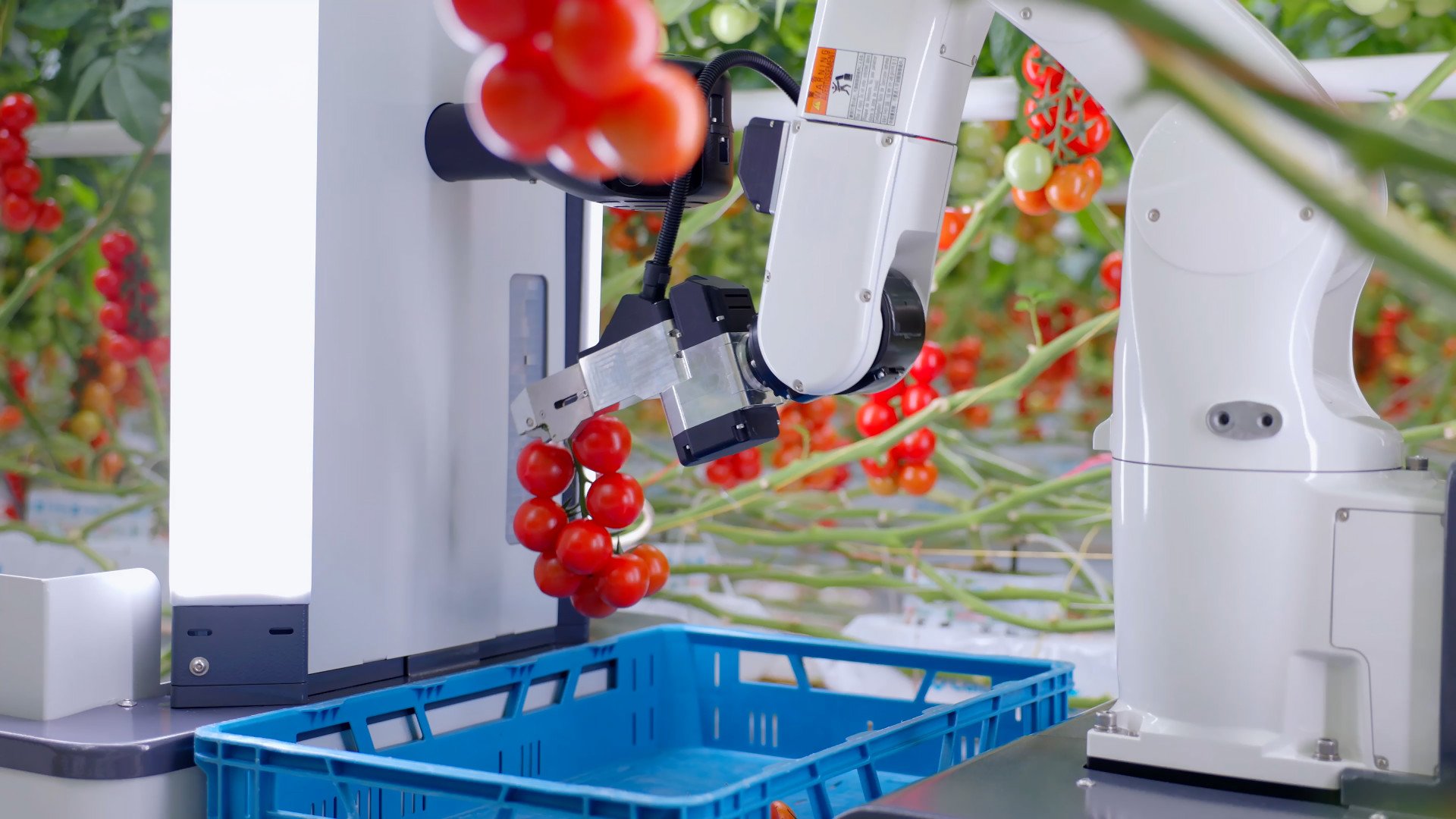
Tomato harvesting robot launched In February, TTA-ISO launched a fully automated tomato harvesting robot. The advanced harvesting robot employs AI-driven ripeness detection powered by Robovision’s advanced vision software, integrates seamlessly with standard heating rails (550-600 mm), and features an
intelligent 3D-guided smart robot navigation system.
The robot has an operational speed of up to 450 vines per hour, while automated disinfection improves food safety and hygiene. The harvesting robot reduces reliance on manual picking by automating the labour-intensive aspects of the process. An individual operator can efficiently oversee up to six HVRs, thus lowering labour costs while upholding a consistent and dependable harvesting pace. The system also gathers real-time data, allowing growers to improve their harvesting strategies and optimize productivity.
Although initially designed for tomato harvesting, the technology behind the harvester holds promising potential for adaptation to other greenhouse crops. While current efforts focus on perfecting tomato harvesting, TTA-ISO is already exploring future opportunities to expand its innovative automation solutions.
The first deliveries are setfor 2026. ●
Greenhouse Cropping News
Netherlands-based companies Biota Nutri BV, De Groot en Slot and REKA Group BV have joined forces in the horticulture sector.
This partnership “combines REKA’s global scale and the experience and network of De Groot en Slot with Biota’s unique product lines to expand production and inventories to meet the current market demands for organic fertilizers,” noted anews release.
Biota Nutri develops and produces circular methods for producing organic and vegan fertilizers from commercial waste streams.
De Groot en Slot is active in breeding and production of onion seeds, the garden retail and breeding and production of seaweed starting materials.
REKA is a carve-out of Koppert Biological Systems and builds on decades of expertise in soil health and regenerative agriculture. The company began as part of Koppert in 2013 and became an independent entity in 2024. ●
Luxembourg’s government is to offer €20 million in state subsidies for the construction of greenhouses, as part of a bid to boost the national production of fruit and vegetables.
The draft legislation was discussed for the first time during a closed-doors meeting of the agriculture committee in December, according to a report of the meeting published on parliament’s website.
The grants will be capped at a maximum of €12 million, with a minimum investment required of€1 million.
Farmers will receive a subsidy equivalent to 40 percent of the investment, while young farmers will be paid up to 55 percent.
Subsidies will be provided for greenhouses in which production activities take place, as well as buildings needed for the storage and packaging of products.
A call for projects will be made “until the funds are exhausted”, the report of the meeting noted. ●
Source: Luxembourg Times
New York state-based Empire State Greenhouses (ESG) is partnering with vertical farming technology provider, Intelligent Growth Solutions (IGS), to construct a circular “GigaFarm” – 100 Growth Towers capable of producing 6.4 million pounds of produce per year.
The 385,000 square-foot, carbon-negative facility will take a “revolutionary circular approach” to crop production,” noted a news release. This means its 100 vertical farming Growth Towers, provided by IGS, will be integrated into a network of on-site facilities including renewable energy generation and food-energy-waste (FEW) systems, thereby eliminating a third of the cost of food deriving from energy.
When fully operational, the 100-tower GigaFarm farm will be capable of producing more than a billion plants each year and generating 6.4 million pounds of produce annually with another 1.6 million pounds of produce grown in greenhouses, totalling over eight million pounds annually. As many as 50 different crop types will be grown in the next-generation controlled environment agriculture (CEA) facility.
ESG said the crop factory will be up to 98 percent water efficient and will utilize the following technologies: Gasifier; Solar PV; LED grow lights; Energy Storage; and Combined Heat & Power.
The site will be located at Cobleskill in rural upstate New York.
Intelligent Growth Solutions is a relatively new name on the vertical farming scene in North America. “We have seen how our GigaFarm model works in markets such as the Middle East and are excited to use this expertise to develop the model to fit the market requirements for North America and beyond,” said Andrew Lloyd, chief executive officer of IGS.
The facility is also co-located alongside SUNY Cobleskill, a college of agriculture and technology. ESG plans to bring over150 full time jobs and more than 600 indirect jobs to the area, including internship, research and employment opportunities for SUNY Cobleskill students and members of the campus community. ●
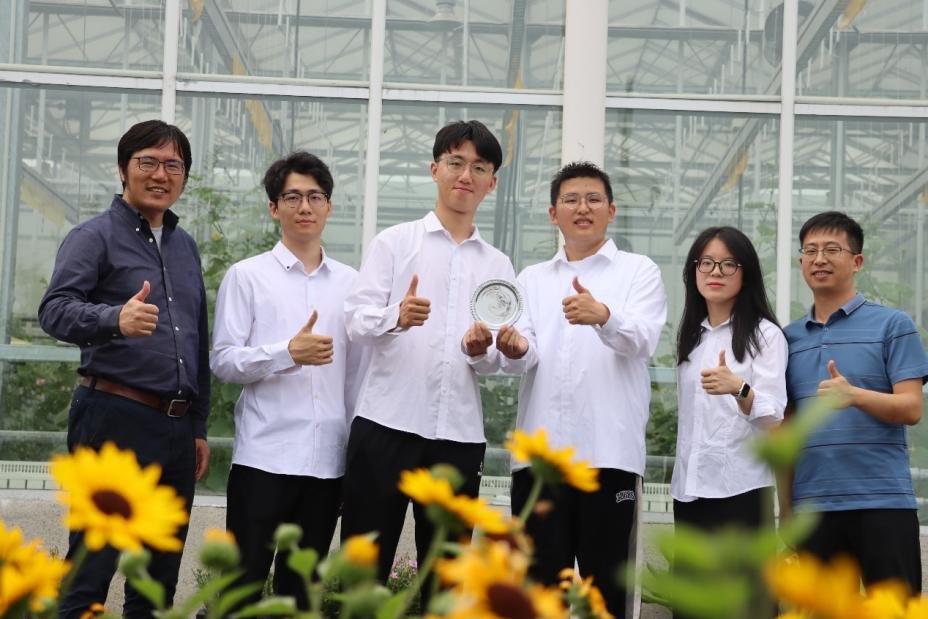
Competing against the world’s top universities and industry leaders, China-based Zhejiang University's (ZJU) IDEAS team was crowned the victor of the 4th Autonomous Greenhouse Challenge held in the Netherlands.
The IDEAS team is the first Chinese team to win this honour.
Hosted by Wageningen University & Research (WUR), the 2024 Autonomous Greenhouse Challenge brought together 23 teams from 24 countries, aiming to advance smart greenhouse management through artificial intelligence, while minimizing resource consumption and labour inputs. Participants tackled four major tasks including 1) machine vision task to exact critical growth parameters; 2) environmental control strategies to improve tomato quality and yield while effectively managing costs; 3) deep learning model task to identify pest on a small trap, and 4) AI strategy for system optimization.
In early June 2024, the first online phase of the Challenge was held, with five teams advancing to the next phase of the competition. The five teams included the IDEAS team (Zhejiang University, China), MuGrow (TU Delft, Gardin, Rijk Zwaan, Wageningen University), AgriFusion (Croft, IMEC, GreenBites, Harvard University, Korea University of Technology and Education, Seoul National University), Trigger (Grit, Ridder, Daeyoung, Bigwave, Seoul National University, Keimyung University), and Tomatonuts (Wageningen University, China Agricultural University, Jingwa Agricultural Science and Technology Innovation Centre, Golden Scorpion).
From 2 September to 15 December, these five teams put their machine learning and computer vision skills to the test by remotely and autonomously growing a real dwarf tomato crop in their own greenhouse compartment. Their goal was to achieve the highest yields and best quality with the most sustainable input of resources, such as water and energy, and thus maximize net profit. They also had to make decisions on biological pestcontrol actions.
All members of the IDEAS team hail from the Intelligence Driven and Enabled Agricultural Systems (IDEAS) laboratory at the College of Biosystems Engineering and Food Science of ZJU. Under the mentorship of Professor LIN Tao, who specializes in agricultural artificial intelligence, team members XIA Fulin, LIU Wei, FU Rongmei, MA Xunyi, and WU Yanxu applied their combined expertise in agricultural engineering, computer vision, AI, and horticulture.
Team leader XIA Fulin reflected on their achievement. "Winning this championship is both an honour and a powerful motivator for us. It strengthens our resolve to continue exploring the agricultural field. We believe that with ongoing technological innovation and its application, we can truly realize fully automated greenhouse management."
Several factors were taken into account when determining the winner, explains Stef Maree, a data scientist involved in the Challenge. “The most important criterion was the net profit achieved by the teams. It was pre-determined that teams would earn money based on the number of ripe tomatoes per square metre of the greenhouse. This amount was then divided by the number of days it took to complete the harvest. The earlier the harvest, the better – provided the tomatoes were ripe, of course. On the other hand, the teams incurred costs for heating, electricity, CO₂, depreciation, and materials.”
In addition to the score for their harvest, teams could earn bonus points or incur penalties. Maree explains: “Bonus points were awarded for decisions related to integrated pest management (IPM). Each week, teams had to decide how much and which types of biological pest control to use against potential threats, such as whiteflies. Correct IPM strategies earned them points. Teams incurred few penalties for manual interventions. This happened once when one team’s irrigation stopped, and in two cases, the algorithm miscalculated the harvest date, resulting in delays.”
According to Maree, the winning factor was IDEAS’ decision to cultivate with as many pots per square metre as possible. “Normally, during cultivation, a grower spaces the plants further apart to ensure all leaves receive enough light and the plants maintain a good shape. But it turns out that this is not necessary for a good yield,” he said. “The plant density of IDEAS was almost twice as high as that of most other teams, resulting in a higher profit per square metre per day. IDEAS’ overall cultivation strategy was also effective – they were resource-
efficient, making extensive use of energy screens.”
Challenge project leader Silke Hemming noted the teams operated at an incredibly high level. “Apart from a few minor adjustments, each team managed to achieve a successful autonomous harvest. And they did so well before the 15 December deadline,” she said. “This demonstrates that they developed excellent algorithms in a relatively short amount of time. As in previous years, the teams initially underestimated the amount of work and complexity involved. Especially during the testing phase before the challenge began, things often didn’t go as planned. But in the end, every team succeeded.”
According to Hemming, this fourth edition of the challenge has brought the horticultural sector closer to fully autonomous greenhouse cultivation. “Letting an algorithm take control of a greenhouse and achieving a full harvest after a few months doesn’t yet exist in practice,” she noted. “No grower has fully automated this process. However, specific aspects, such as autonomous temperature control, are already in use. We’ve demonstrated that cultivation – except for aspects like IPM – can be fully autonomous. Of course, there are still many challenges and areas for improvement, but we now have proof that it’s possible to complete a growing cycle with an algorithm.” ●