By Janet Kanters
In the world’s quest to meet the demands of a growing population and ensure food security, one fundamental resource has become a focal point: healthy soil. Often overlooked, soil plays an essential role in global agricultural systems, not only as the medium where crops grow but also as a critical component of the broader ecosystem. As challenges such as climate change, land degradation and biodiversity loss mount, understanding the importance of soil health has never been more urgent.
At its core, soil is the lifeblood of agriculture. Healthy soils provide the nutrients, water and structure necessary for plants to thrive. Without fertile soils, food production would not be possible.
Healthy soils are rich in organic matter and microorganisms that help break down nutrients and make them available to plants. They also support diverse ecosystems, from bacteria to earthworms, which help improve soil structure and nutrient cycling. This biological activity enhances soil fertility, ensuring that crops receive the proper nutrients for growth.
Proper soil management practices ensure that soils maintain the necessary density, porosity and structure to support robust agricultural systems. These factors
enable roots to penetrate easily, allowing crops to access vital nutrients and water more efficiently. Beyond these benefits, effective soil preparation also enhances crucial physical properties such as permeability, compaction,and water distribution – ensuring that plants thrive in a healthyand fertile environment.
A global effort to conserveand restore soilsRecognizing the significance of healthy soils, the United Nations’ Food and Agriculture Organization (FAO) established the Global Soil Partnership (GSP) in 2012. Its mission: to protect, restore and sustainably manage the world’s soil resources. In the years since, the GSP has made notable strides in promoting soil health, including establishing the Intergovernmental Technical Panel on Soils and
launching World Soil Day (December 5), a key initiative to raise global awareness on soil conservation.
But while there has been progress, the need for more concerted action is urgent. According to the FAO, soil degradation continues at an alarming rate, impacting food production, water systems and biodiversity. The situation is compounded by climate change, urbanization and unsustainable farming practices. The GSP Action Framework 2022-2030 highlights the necessity of improving soil health to meet global sustainability goals and adapt to climate challenges.
With this new Action Framework,the GSP aims to restore the health of 50 percent of the world's soils by 2030 – a critical target to ensure that healthy soils continue to provide essential ecosystem services,
including climate change mitigation, carbon sequestration and food security.
Improving agricultural productivityNo one knows a piece of land better than the farmer who tends to it.A farmer’s success depends on understanding their land and what their fields require. While farmers are already familiar with key aspects such as soil type and crop rotation, technology can enhance their knowledge by offering data-driven insights into field performance, helping them make more informed decisions.
According to the Soil Health Institute, maintaining soil health can also increase microbial diversity and build climate resilience. Healthier soils have better water infiltration and retention properties, which are essential in maintaining crop production in areas prone to drought.
Soil health indicators, such as aggregate stability, residue breakdown and water infiltration, are critical measures of a soil’s ability to function effectively. Healthy soils should display strong aggregate stability, promote efficient water infiltration, and support active microbial populations – all of which are essential for long-term agricultural productivity and sustainability.
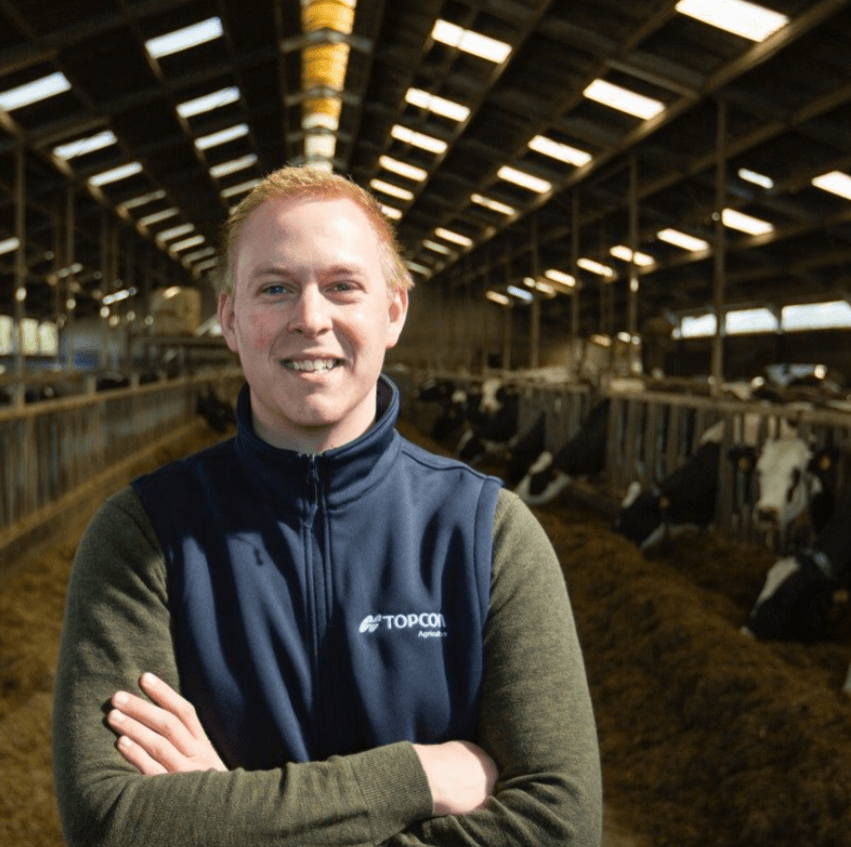
According to Tim van der Leck, regional sales manager NW Europe at Topcon Agriculture, cropping systems and crop management are the cornerstones of successful modern farming, so the importance of good soil preparation cannot be overstated.
Tim van der Leck,regional sales manager NW Europe, Topcon Agriculture
“Soil health is paramount to good farming,” says van der Leck. “Healthy soil provides good yields, and the only way to achieve this is by treating the earth properly. That means understanding its drainage and water retention, making sure it is properly tilled yet not overworked, and practicing good crop rotation.
“As every farmer knows, good soil preparation is key to having a fruitful yield,” he adds. “By preparing the soil bed, you ensure the roots can settle properly and an overflow of water can be drained to avoid too much water collecting near the seeds. Having the right soil preparation also helps by reducing weed stress and, therefore, protecting future crops.”
van der Leck says some farmers may also choose to make a false seedbed, which encourages any weeds that are ready to rise to do so in the ‘right’ moment – away from key seeding, planting and harvesting moments – making it easier to eliminate them.
“Once the weeds come up, the farmer can re-prepare the seedbed, removing the newly grown weeds and delivering a clearer growing plain for crops,” he explains. “Not only does this approach save on the use of chemicals to treat weed growth, it’s also a labour-saving exercise; helping reduce overheads on both chemical use and labour hours, and supporting efforts to streamline farming and make efficiencies.”
The soil preparation phase is clearly important in agriculture, and Topcon has developed several solutions that are specifically designed to help farmers approach this stage, from land forming through to autosteering.
“Land forming is a core part of soil preparation because of its role in water management,” says van der Leck. “Our solutions, like GNSS Land Forming by Topcon, help farmers ensure that the right amount of water is available to the crops, which helps improve yields and minimizes the need for additional input.”
Topcon’s GNSS Land Forming solution also provides a complete workflow, starting with field surveys, then mapping design and supporting implementation. The company also offers a laser solution that helps farmers create a flat plane which they say is is cost-effective and accurate.
“From there, farmers need to look at tillage depth to allow the field to be cultivated at a set depth. Fields are not uniform, and farmers will already know that tillage can be uneven,” explains van der Leck. “Tillage Depth Control by Topcon is a solution that helps address this, adding sensors to the tillage implement to deliver a uniform depth throughout the field, even on sloping or uneven ground. This has obvious advantages in terms of delivering a consistent depth, as well as generating fuel savings by preventing the machine from going too deep – demanding more power (and fuel) fromthe tractor.”
In preparation, as with planting, overlap costs money while underlap leaves gaps uncultivated. “Autosteering is the best solution for correcting these, and Topcon’s autosteering solutions work with farmers’ existing machinery to cut down on overlap and avoid underlap.
This minimizes unnecessary passes over the field, reducing soil compaction and preserving soil structure,” notes van der Leck.
A call for action: The road ahead Healthy soils are not just an agricultural necessity – they are a global imperative. From increasing food production and supporting climate resilience to maintaining biodiversity and mitigating climate change, soils are a vital resource that underpins the health of our planet. As the global population continues to rise, the need to protect, restore and sustainably manage soils has never been more pressing.
“We are in a new age of information, and technology in agriculture has advanced significantly to help farmers make the most of their most precious resources. At its core, farming is a business that needs good yields and insight to thrive. Using digital tools to inform farming approaches is a key way that farmers can protect the soil and safeguard good yields,” says van der Leck.
The soil health movement has gained momentum, but much work remains. Global collaborations, such as the GSP, and international initiatives like World Soil Day, have helped raise awareness. Yet, the future of soil health depends on the adoption of sustainable practices at the local level. Governments, farmers, researchers and communities must work together to implement solutions that restore and protect soils.
The GSP Action Framework 2022-2030 provides a roadmap for this effort, focusing on six key action areas: restoring soils for ecosystem services, strengthening soil governance, promoting soil knowledge, raising awareness, and monitoring soil health. The framework stresses the need for inclusive, data-driven strategies that leave no one behind, particularly in developing countries where soil degradation is often most severe.
Ultimately, healthy soils are essential not only for food security and environmental sustainability but also for building climate resilience and supporting biodiversity. As global stakeholders continue to work towards the UN Sustainable Development Goals, soil health must remain a priority. By fostering collaboration and promoting sustainable soil management practices, we can ensure a future where our soils, and the ecosystems they sustain, remain healthy for generations to come. ●
By preparing the soil bed, you ensure the rootscan settle properly and an overflow of watercan be drained to avoid too much water collecting near the seeds.
We know what regenerative agriculture is, ‘Outcome-based farming approach that generates agricultural products while improving soil health, biodiversity, climate, water resources, and supporting farming livelihoods’ [Ref 1] and how it can benefit the planet. We know too that farmers stand ready to implement it, but only if they can both finance the transition successfully and if it is at least as profitable for them as conventional agriculture.
The first part of the equation is the most challenging. For a range of reasons, adoption involves short-term financial pain, with EBITDA potentially plunging for several years. Rebuilding soil quality, including restoring microbial activity happens slowly, it is likely that several years will pass before soil carbon levels rise significantly. [Ref 2] Similarly, crop yields may (but not necessarily [Ref 3]) dip initially before the soil has adjusted to a new chemical balance, again recovery can take several years. Regenerative practices such as cover cropping, rotational grazing, or reduced tillage, can take just as long to offset through reduced input costs and improved yields. [Ref 4] Even accessing premium markets takes time. Indebted farmers in developed countries are no more capable of absorbing such financial shocks than their equivalents in developing countries existing from season to season. At the same time, green finance to agriculture is ‘starkly underfunded’ according to the Climate Policy Initiative. Even in the U.S., which leads in private sector implementation, somewhere between $30-80bn would be needed to shift farmers towards no-till farming and cover crops, for example, [Ref 5] whereas investments in transition finance for regenerative agriculture totaled only $3.6 billion between 2019 and 2023 [Ref 6] and less than 5% of the $100t green bond market currently goes to agriculture. [Ref 7]
Existing financing schemesfor regenerative agriculture All is far from lost. Some programmes already exist. Concessionary green finance is now routine, although it does not easily scale down to where it is most needed, the individual farm. Impact investment funds are also focused on regenerative farming, but they are few in number and small in scale. In the U.S., private sector actors such as Indigo now work with farmers to adopt soil-improving practices and generate registry-issued carbon credits. [Ref 8] In Australia, the NAB bank runs an emissions-reduction lending scheme that carries a 1.15% per annum interest rate discount from standard agribusiness loans with considerable success. [Ref 9] Integrating carbon credits to ‘assist farmers in their transition, measure the impact using our own technology and help farmers monetize carbon impact’ [Ref 10] has also become part of European bank business, but again only in practice for larger agribusinesses. In the UK, the Sustainable Farming Incentive (SFI) scheme [Ref 11] pays farmers in England to adopt and maintain farming practices such as buffer strips to provide space for
wildlife and reducing fertiliser use to benefit nutrient management. Whether this can be accurately portrayed as supporting regenerative agriculture as Defra claims is questionable, especially as they themselves admit that there may be significant implications for landscape management, by no means all yet properly understood. Such initiatives are not confined to developed countries: in Kenya, the Upper Tana-Nairobi Water Fund Trust succeeded in bringing civic actors and farmers together so that the beneficiaries of clean water paid to achieve it. [Ref 12]
Also encouraging is the fact that once achieved, regenerative agriculture can certainly prove profitable. In the U.S. context, the Boston Consulting Group estimated [Ref 13] that farmers engaged in regenerative agriculture can decrease fertilizer use by 50% and pesticides by up to 75%, raising their profitability by up to 120% and delivering a 15-25% return on investment in the long term. These are financial incentives worth organising for.
A way forward The World Economic Forum (WEF) believes it has the answer in a suite of measures that taken together would enable farmers to bridge the gap and expand the range of available schemes. The most important component of their plan is a grace period attached to lending. That can be funded through insurance mechanisms familiar to the World Bank and the IFC, providing guarantees to farmers that they will be able to make repayments once the benefits of higher quality product and reduced fertiliser and pesticide costs flow through into increased EBITDA. The WEF’s hope that externalities such as clean water and better air quality might be monetised is a tall order, as even in developed countries like Australia there is no financial appetite to curb burning off, for example, even though as the World Bank reported, Payment for Ecosystem Services (PES) has achieved results in India in precisely this direction. [Ref 14] But the simultaneous creation of a financing stack and opportunities for farmers and other agribusinesses to pick ‘n mix amongst products and services on offer might be possible, and would certainly help. To this can be added the impact of sustainability reporting, if the International Sustainability Standards Board can continue to drive more climate reporting by corporates and investors. But even here, the recent EU Commission ‘Omnibus’ decision to lengthen implementation times and reduce emission reporting scope in the name of increasing competitiveness is scarcely a good sign. [Ref 15] So in practice, right as the WEF is in principle, individual schemes such as these are the way forward.
Conclusion Overcoming the funding gap is the greatest challenge for for regenerative agriculture, even by comparison to its considerable technical obstacles. Without the ability to surmount the short-term decline in cashflow and profitability that almost inevitably accompany a shift away from conventional farming practices, then however profitable it can eventually be, there will always be severe constraints on its adoption. Financing mechanisms do exist on a relatively small scale, but for the foreseeable future, they will need the support of all industry stakeholders.
Dr. Julian Roche is Adjunct Senior Research Fellow at the University of Western Australia. As well as being a consultant, advising global banks and government agencies including UNCTAD, on aspects of agribusiness, investment, valuation and restructuring, Dr. Roche is a leading tutor on the agribusiness and real estate courses for Informa’s IFF business unit. He has also published several books on real estate derivatives and business valuations. ●
Ref 1: https://www.nrdc.org/stories/regenerative-agriculture-101
Ref 2: https://geopard.tech/blog/what-is-soil-regeneration/#:~:text=In%20general%2C%20it%20can%20take,observed%20within%20a%20few%20years
Ref 3: https://www.knightfrank.com/research/article/2023-06-30-regenerative-agriculture-is-it-a-profitable-venture
Ref 4: https://www.sare.org/resources/cover-crops/
Ref 5: https://www3.weforum.org/docs/WEF_100_Million_Farmers_2024.pdf
Ref 6: https://www.wbcsd.org/actions/one-planet-business-for-biodiversity-op2b/
Ref 7: https://www.climatepolicyinitiative.org/wp-content/uploads/2024/10/Global-Landscape-of-Climate-Finance-2024.pdf pg 15
Ref 8: https://www.indigoag.com/sustainability-solutions
Ref 9: https://www.nab.com.au/business/loans-and-finance/agribusiness-loans/green-finance-agri
Ref 10: https://www.rabobank.com/about-us/carbon-bank
Ref 11: https://www.landuse.co.uk/thoughts/what-is-the-sustainable-farming-incentive-scheme/
Ref 12: https://nairobiwaterfund.org/
Ref 13: https://www.bcg.com/publications/2023/regenerative-agriculture-profitability-us-farmers
Ref 14: https://openknowledge.worldbank.org/entities/publication/18ec4b7b-7d62-467b-8f96-d6743b1d0862
Ref 15: https://ec.europa.eu/commission/presscorner/detail/en/ip_25_614
“To serve the market that is underserved” is how Max Roz, CEO and founder of Waypoint Commodities describes the company’s mission. Established just two years ago, the company has developed its own digital procurement platform specialising in water-soluble fertilizers. The platform uses digital technology to provide smaller companies with an end-to-end purchasing experience that delivers supply chain security. New AG International’s Luke Hutson spoke withMax Roz.
What was your route to Waypoint Commodities and what was the original plan when you foundedthe company? I have a pretty unassuming background in relation to this because I was previously in finance, although this became a very relevant point as we started building Waypoint due to the need for structuring trade finance solutions as part of the platform. I spent about six years primarily in private credit hedge funds, most recently at Oaktree Capital (which, more familiar to this industry, owns Hartree Partners).
Originally the mandate was to digitalise commodity chemical procurement and trading. We won a highly competitive grant from Innovate UK to get started. They really loved the angle digitalising an industry that is critical to the UK but in decline.
We started operations two yearsago and the fertiliser focus camein 18 months ago as our go-to-market focus.
Why the move into fertilizer, and how is Waypoint Commodities different from other trading houses? The trading of commodity chemicals and fertilisers is still mostly bilateral. If I’d like to purchase X tons of something, I’m going to have to ring five different people to get different offers, then compare them. And if I am overly reliant on a certain origin or source, I’m kind of stuck if export bans, supply chain issues or even sanctions come into play – something we have seen recently play out.
So how do we digitalize any part of this industry or process to allow you to reliably purchase from as many diversified options as possible to secure your product purchases and to do it efficiently? That was the initial thought, and after about nine months of field research and prototyping, we arrived at our first answer. Is it going to be a pure marketplace? No.
It cannot be just a marketplace. Because it’s international trade, there’s a lot more in the value chain that a marketplace just cannot provide. Simply trying to match supply and demand isn’t enough – that’s mostly what brokers do. What about the logistics? Operations? Financing?
So, we were thinking it needs to be more of an integrated, one-stop-shop play where you solve the problem of how we provide smaller companies downstream with supply chain security by leveraging technology. So that’s the idea because as you go down the chain, you get to the companies that are buying, anything from 200 tonnes to 500 tonnes, maybe 1,000 tonnes.
How does the Waypoint platform help those smaller players?You have this issue where if you are trying to serve this segment traditionally today you still must do the same amount of paperwork, same amount of chasing to do as the big volumes. There’s an opportunity to streamline the transaction and operational part where you can serve the 200-tonne purchaser with as good of a purchasing experience as the big players. And there’s also the opportunity to aggregate all those small buyers to give them much better prices. Technology can enable that to happen in real time in a way the purely traditional approach cannot.
We are starting to get closer to what looks like a digital trading house that can operate with an efficiency unmatched by anyone who is operating still purely on penand paper.
We position ourselves as a procurement platform, because we are the contracting party. Waypoint purchases back-to-back on your behalf with the producers, and adds value through logistics, insurance and financing.
It looks like what a trading house does, but leveraging digital tooling to get the job done with unmatched speed and efficiency. We don’t speculate on the market. We don’t take positions. We are there to primarily serve spot demand, although we now have our first contract to supply in South Africa.
“To serve the market thatis underserved” is how Max Roz, CEO and founder of Waypoint Commodities describes the company’s mission.
Why the focus on water-soluble fertilizers?We soon realised that we can’t just attempt to service all commodity chemicals because that’s not specific enough. We need to build liquidity in specific categories. We looked at things like water treatment, construction, general chemicals; but agriculture was an interesting one because it was the one where the supply chain is really fragmented. Then we looked closer at specialties and water-soluble fertilizers, which is the fastest-growing category today.
There are still, in many cases, too many middlemen in the system when it comes to smaller purchases. That’s where we become the waypoint between the end consumer and the factory, which is great because we can achieve lower pricing. It’s a one-stop shop. You can buy all your solubles and specialties from all origins.
I don’t want to trivialise it too much, but conceptually why can’t you click to order a product that arrives at your nominated port in September, with payment terms included?
With Waypoint we also have a dashboard that enables you to track your vessel position, whether it’s one container or break bulk. And all the documents are available in one place. They get uploaded and are stored securely – available 24/7.
How do you price your service?Contractually, Waypoint sells the product to you. We just mark up our costs to cover the transaction servicing, so a customer just sees the final price with logistics and financing included. We make it super simple. There’s no charge for using the Waypoint platform, so if you don’t get value, you don’t pay anything.
Do you service requests for conventional fertilizers, such as DAP?Right now we are we are mostly water-solubles and specialties, products like TMAP, SOP, CN, MKP, etc. But we do of course also provide pricing indications and data for the major nutrients because they’re an integral part of the market, and can offer smaller quantities of DAP as well as ammonium sulphate, mainly designed for the containerized market. We are here to provide an alternative for an underserved sector – smaller buyers that buy smaller quantities, rather than to compete with the established players in the bulk market.
What are the trends that we’re seeing in the water-soluble markets?Alexander Plähn, who recently joined Waypoint as global sales director, answers: One of the key drivers for Waypoint is the sustainability and ESG component – water-soluble fertilizers are significantly more efficient, and we’re seeing increasing demand as a result. The market is growing at a rate of up to 12 percent CAGR, with a clear trend toward nutrient efficiency.
Alexander Plähn, global sales director,Waypoint
At the same time, agriculture is becoming more sophisticated, with a stronger focus on precision nutrition and enhanced fertilizers. While input costs remain a concern for farmers worldwide, the right education and approach help them recognize the added value – especially the yield increases these solutionscan provide.
Another major factor is the growth of aquaculture and greenhouse production, particularly in regions like the Middle East and Africa, where greenhouse farming is expanding rapidly. In many African countries, this sector is being driven by Israeli companies and other innovators, making it an increasingly significant part of the market.
How are the freight markets looking at the moment? Is there a difference in direction for containers and bulk? George Perkins, Waypoint’s senior global shipping associate, answers:
The container and bulk markets are moving in different directions right now. Container rates, especially out of China, are under pressure due to weak demand, though carriers are
trying to push through rate increases in March. The market is also shifting with new shipping alliances and ongoing oversupply.
On the bulk side, things are more stable, particularly for Supramax and Ultramax vessels in regions like the U.S. Gulf and South Atlantic. However, Capesize and Panamax markets are still struggling with low demand and oversupply.
We’re closely watching these trends to find the best and most cost-effective shipping options for fertilizers. We recently optimized our break-bulk freight options to successfully deliver 10,000 tons of Kieserite to a major Polish agricultural player through Waypoint. If the Red Sea reopens, it could shake things up by increasing capacity and pushing container rates lower, though logistical challenges
remain. Meanwhile, U.S. trade policies continue to influence global shipping, adding another layer of uncertainty to both markets. ●
MyLand, a soil health innovation company, has launched a new Educational Hub in collaboration with Texas A&M AgriLife Research, a Texas research agency in agriculture, natural resources, and life sciences.
The Educational Hub will feature six online courses designed to educate individuals on the importance of soil health. Each will include expert contributions from both MyLandand Texas A&M AgriLife Research.
The Educational Hub will offer courses that address critical soil health topics, including: an introduction to soil health; chemical traits of soil; physical traits of soil; biological traits of soil; saline and sodic soils; and, soil testing.
Each course is open to anyone with an interest in learning about optimal soil health – from growers and ranchers to educators and environmental advocates.
“Our collaboration with Texas A&M AgriLife Research represents an exciting step forward in making soil health knowledge accessible to a broad audience,” said Dane Hague, co-founder and CEO of MyLand. “Soil health is the foundation of sustainable agriculture, and by offering these courses, we are equipping individuals with the knowledge they need to support healthier ecosystems.”
The subject matter experts from MyLand and Texas A&M AgriLife Research Center include professors, researchers, and certified crop advisors.
“Texas A&M AgriLife Research has long been committed to advancing soil health practices,” said G. Cliff Lamb, director of AgriLife Research. “This collaboration with MyLand allows us to bring our world-class expertise to a wider audience. These courses will empower people to make informed decisions about land management and soil conservation.” ●
Scientists have discovered how plants adapt their root systems in drought conditions to grow steeper into the soil to access deeper water reserves.
Plant scientists from the University of Nottingham, in collaboration with Shanghai Jiao Tong University, have identified how abscisic acid (ABA), a plant hormone known for its role in drought response, influences root growth angles in cereal crops such as rice and maize. The results have been published in Current Biology.
The study highlights how ABA and auxin, another key hormone, work together to shape root growth angle, providing a potential strategy to develop drought-resistant crops with improved root system architecture.
Drought, a major abiotic stressor, has caused substantial crop production losses of approximately $30 billion over the past decade.
Plants rely on their root systems, the primary organs for interacting with soil, to actively seek water. In drought conditions, water often depletes in the topsoil and remains accessible only in the deeper subsoil layers. Abscisic acid (ABA) plays an important role in helping plants adapt to these challenging conditions. This new study gives new insights into how ABA changes root growth angles to enable plants to reach out deeper subsoils in search of water.
The researchers discovered a new mechanism where ABA promotes the production of auxin, which enhances root gravitropism to grow them at steeper angles in response to drought. Experiments showed that plants with genetic mutations that block ABA production had shallower root angles and weaker root bending response to gravity compared to normal plants. These defects were linked to lower auxin levels in their roots. By adding auxin externally, the researchers restored normal root growth in these mutants, showing that auxin is key to this process.
The findings were consistent across both rice and maize, suggesting that this mechanism could apply to other cereal crops as well. ●