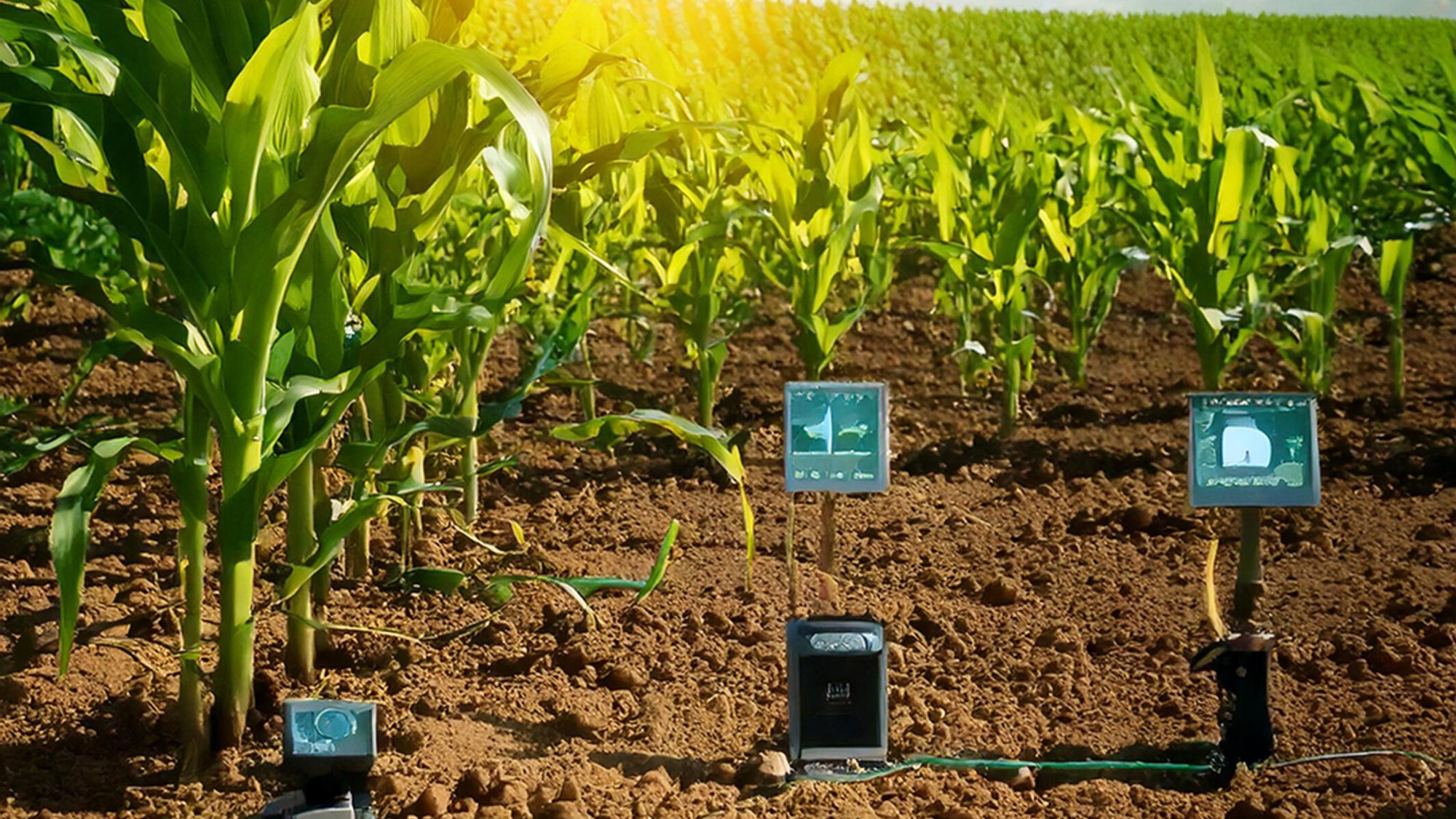
Previous page: Drone-based imaging can detect soil health issues like nutrient deficiencies and compaction, enabling farmers to address these problems before they affect crop yields. This technology enhances precision farming by providing detailed, real-time insights into soil conditions.(Graphic created with Adobe Firefly)
By University of Nebraska-Lincoln
Healthy soil is the foundation of a thriving ecosystem, supporting diverse life forms and significantly influencing water and air quality. In recent years, technological innovations have revolutionized our approach to understanding and managing soil health. Traditional methods of soil assessment have given way to sophisticated,data-driven technologies that provide unprecedented insights intosoil conditions.
Historically, we focused primarily on soil fertility and nutrient levels, guided by Liebig’s Law of the Minimum and its bucket analogy. However, the concept of soil health broadens our perspective beyond just promoting plant growth. It emphasizes the importance of sustaining diverse organisms and maintaining the soil's functional capacity to provide essential ecosystem services, such as nutrient cycling, carbon sequestration, water quality regulation and biodiversity conservation. Thus, assessing soil health requires examining a complex interplay of physical, chemical and biological factors, including soil structure, aggregate stability, pH, organic matter content and microbial activity.
Modern soil healthmonitoring technologies Farmers in the 21st Century are focused on managing their fields efficiently and committed to adopting innovative practices that enhance and sustain soil health. This shift has increased the demand for monitoring and assessing soil health parameters. Technology advances have introduced various tools for soil health monitoring nutrients through digital soil mapping by using remote and adaptable field sensors, spectroscopic tools and drones. These tools facilitate immediate insight into soil conditions sometimes directly in the field, allowing farmers to make informed decisions based on real-time data.
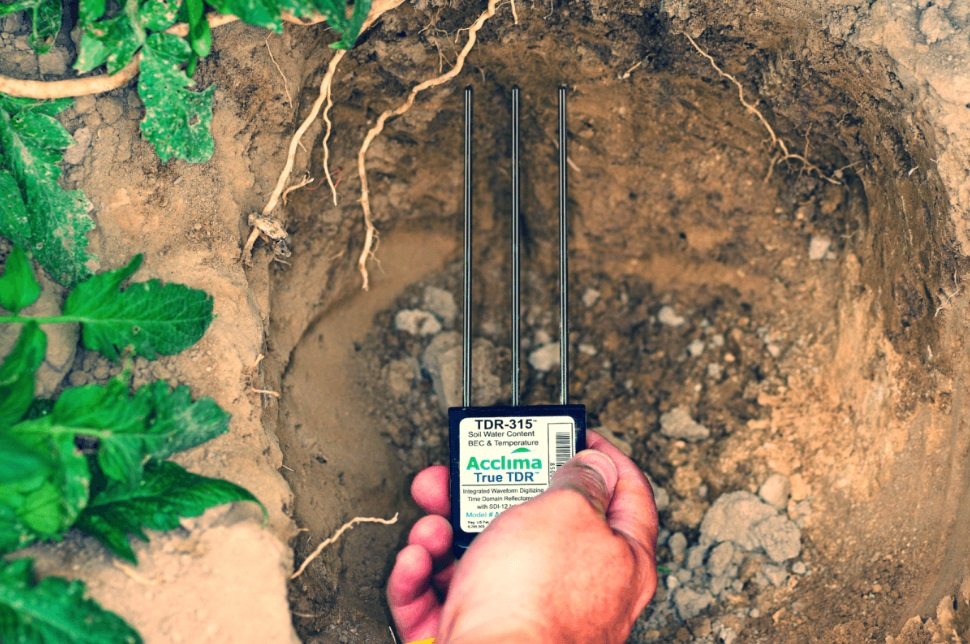
Figure 1.Time Domain Reflectometrysoil probe. Image: soilsensor.com
Sensors Numerous sensor types are employed in the U.S. farming industry for comprehensive soil health monitoring. These include:
Location sensors: GPS devices that help track the precision location of agricultural assets; very useful when building soil and yield maps.
Optical sensors help assess plant health by measuring albedo (sunlight reflectance and absorption, which can help us determine the global warming potential of a plant canopy).
Electrochemical sensors: Devices that can measure soil pH and nutrient levels and detect pollutants.
Mechanical sensors evaluate soil compaction through penetration resistance (e.g., penetrometer)
Dialectric soil moisture sensors monitor moisture levels in real-time.
For example, Time Domain Reflectometry (TDR) probes measure moisture, temperature and electrical conductivity at varying soil depths (Figure 1). This allows you to analyze the interaction between these variables in different soil conditions.
How it works? TDR soil moisture sensors use parallel rods as transmission lines. A voltage pulse is sent along these rods and reflected back to a sensor for analysis. The pulse's velocity through the rods correlates with the soil's apparent permittivity. Wet soil slows the pulse, while dry soil allows faster transmission.
Overall, these sensors can transmit data in real-time, allowing farmers to make immediate decisions based on current soil conditions.
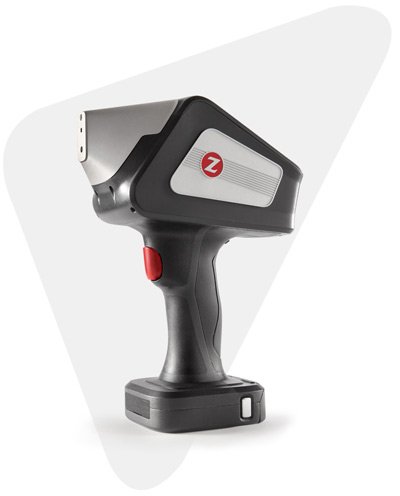
Figure 2. SciAps Z300 handheld LIBS analyser.Image: www.sciaps.com
Spectroscopic methods Innovative spectroscopic methods have transformed soil analysis and are very powerful, providing valuable information about the molecular composition and structure of materials like soil. Nowadays, these methods can potentially make soil analyses less costly, more accurate, and high throughput with less sample preparation. This makes them highly versatile and ideal for real-time monitoring of soil health.
Laser-induced breakdown spectroscopy (LIBS)
Infrared spectroscopy (e.g., Vis-NIR, NIR, MIR)
All of these spectroscopic methods rely on the interaction between electromagnetic radiation and matter. When infrared light interacts with the soil, specific frequencies are absorbed, corresponding to the
vibrational energies of molecular bonds within the soil.
Infrared spectroscopy, for example, laser-induced breakdown spectroscopy (Figure 2), has been employed since the early 2000s to measure total soil carbon and nitrogen, along with soil nutrients and heavy metals, and just recently measures soil texture. Analyzing light absorption at specific wavelengths provides a unique "spectral signature" that correlates with soil properties such as organic matter, texture, moisture content and mineral composition. LIBS uses a focused laser to ablate soil samples, creating plasma that emits light with elemental fingerprints.
Near-Infrared (NIR), Mid-Infrared (MIR), and Visible-Near Infrared Spectroscopy are particularly efficient for rapid field use, enabling the simultaneous estimation of multiple soil parameters in seconds. Both analyze soil properties by measuring light absorption at specific wavelengths (MIR from 2.5 to 25 µm, NIR from 780 to 2500 nm, and Vis-NIR from 400 nm to 2500nm).
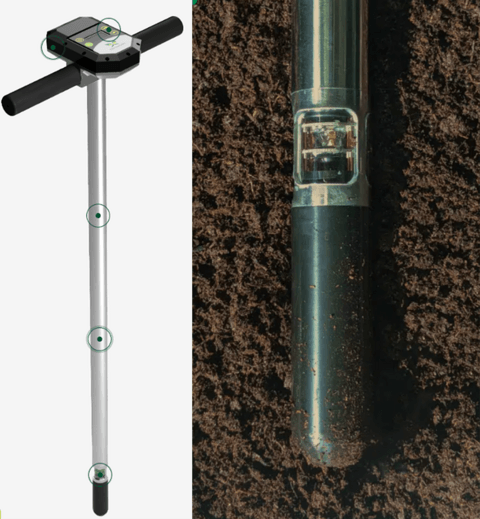
Figure 3. ChrysaLabs soil probe (a) with a combination of spectroscopic sensors located in the tip (b).
Image: www.chrysalabs.com/technology
These methods are invaluable for assessing soil organic carbon levels, a key indicator of healthy soils that enhance structure and fertility. Advances in these technologies also support efficient monitoring of carbon sequestration efforts, contributing to climate change mitigation. Their portability and ability to provide rapid results make them excellent alternatives to traditional laboratory analyses for field applications. One of them is the inclusion of these spectroscopic sensors into soil probes like the one developed by the ChrysaLabs company (Figure 3).
Drones and UAVs Drones equipped with various sensors are increasingly used for high-resolution data collection across extensive ag landscapes. These unmanned aerial vehicles (UAVs) provide rapid assessments of soil health and plant nutrition parameters, aiding farmers in managing their fields more effectively during this era of digital agriculture.
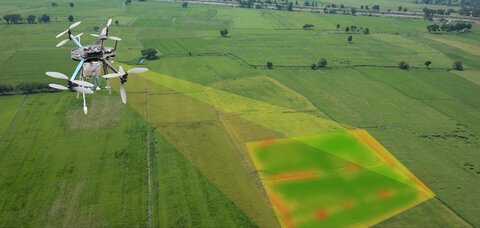
For this, ag professionals use drones with specialized cameras to capture images across various light wavelengths, including visible and near-infrared spectrum (Figure 4). This technology allows farmers and ag professionals to create high-resolution soil and plant canopy maps, detect early signs of crop stress, nutrient deficiencies, or diseases, and track changes in soil and plant health over time. The data collected is analyzed using advanced algorithms and GIS techniques to produce detailed digital field maps. These maps offer valuable insights for precision agriculture, enabling targeted interventions and more efficient resource management.
Figure 4. Drone with a 65R ultra-high resolution aerial RGB sensor. Image: MONOPOLY919/Shutterstock
Future trends insoil health management
As awareness of the importance of soil health grows among farmers and stakeholders, the integration of soil health parameters into agricultural practices is expected to increase. Concerns over sustainability, climate variability and food security drive this trend. The ongoing development of affordable monitoring tools will likely enhance accessibility for farmers, promoting shifts towards data-driven agricultural practices that prioritize soil health.
In this article we did not talk much about AI and machine learning, which are revolutionizing agriculture and soil health management. These technologies are powerful tools for analyzing big data more efficiently to provide insights into soil conditions and guide farming practices. Their scalability allows for quick applications across small or large fields, benefiting diverse farming operations. AI and machine learning are now part of the engine that enhances precision agriculture, enabling data-driven decision-making for improved management.
In brief, the convergence of sensory technology, spectroscopic methods, and UAVs represents a significant advancement in the management of soil health. These tools not only facilitate better agricultural outcomes but also support environmental conservation efforts essential for sustainable farming practices.
This article, 'Technological Advancements in Soil Health Monitoring and Management,' by S. Carolina Córdova, Assistant Professor and Statewide Soil Health Specialist at the University of Nebraska-Lincoln, was originally published on January 26, 2024, on the UNL CropWatch website (https://cropwatch.unl.edu/2024/technological-advancements-soil-health-monitoring-and-management/). Republished with permission from the University of Nebraska-Lincoln. ●
Bonsai Robotics Inc., a developer of physical AI solutions for agriculture applications, has raised US$15 million in Series A funding to advance its physical AI solutions for agriculture applications.
The new funding will enableBonsai to continue enhancingits software capabilities, expanding its physical AI platform and dataset, driving additional OEM partnerships, and accelerating commercialization efforts.
“We have made significant progress building our AI model and data set for autonomous orchard management since our seed round of funding a year ago, so this additional funding is strong validation of the incredible work our team has accomplished and our future growth prospects,” said Tyler Niday, co-founder and chief executive officer of Bonsai Robotics. “Additionally, this capital will allow us to continue to expand our partnerships with manufacturers and growers by delivering innovative physical AI technology solutions that
address the most pressing challenges in agriculture today.”
With its flagship product, Visionsteer, Bonsai provides technology designed to meet grower needs, offering data insights, crop analysis, notifications, job planning, and autonomous vehicle control. The company is currently partnered with multiple equipment manufacturers and has deployed over 40 units with its integrated autonomous solution for tree nut orchard applications both in the U.S. and Australia. Furthermore, the company has collected data from operations on over 500,000 acres, enabling it to provide physical AI technology that is helping a variety of orchard growers reduce operating and capital equipment costs, increase
yields, and “gain unparalleled insights not available before.”
Based on patented AI models, a leading orchard data set and computer-vision software, Bonsai stated its solutions integrate seamlessly to make OEM equipment operate autonomously. Bonsai technology can navigate in GNSS-denied environments, without a cellular or internet connection, making the highly affordable technology ideal for the toughest physical conditions where dust, darkness, debris, elevation changes and vibration may occur.
Bison Ventures led the oversubscribed round with participation from new investor Cibus Capital, and existing investors Acre Venture Partners, Congruent Ventures, Fall Line Capital, E14 Fund, SNR and Serra Ventures.
Bonsai Robotics has designed vision-based technology that allows farm vehicles to autonomously traverse orchards faster than machinery operated by people. ●
Photo: Bonsai Robotics
Fermata, an Israeli-based data science company,has closed $10 millionin a Series A fundinground backed exclusively byRaw Ventures.
The investment will support the company’s strategic vision of developing a centralized ‘digital brain’ for the horticulture industry, allowing autonomous management of crops through advanced data analysis, “creating an ever-evolving system that continuously learns from available data,” said the company in a news release.
Initially focusing on identifying pests and diseases, the funding will be used to expand Fermata’s system into a command center for crop health, further developing its suite of AI-driven solutions to address a range of agricultural challenges.
Using advanced data analytics, the system monitors a wide range of plant health factors, from fertilization to pollination status, with future capabilities set to include forecasting tools like yield prediction tracking. Fermata’s Croptimus suite – which provides 24/7 crop monitoring through computer vision – will process visuals collected through its products and integrate third-party data sources to build more accurate models.
The company has forged strategic collaborations with Microsoft, NVIDIA, Wageningen University, Bayer Crop Sciences, yieldsApp, and agRE.tech, and plans to continue partnering with industry leaders to expand its impact throughout the agritech sector. ●
Yamaha Motor Co., Ltd. has launched Yamaha Agriculture, Inc., a new company focused on delivering autonomous equipment and AI-powered digital solutions.
Through the acquisitions of Robotics Plus (transaction scheduled to be completed by April 2025) and The Yield, Yamaha Agriculture will provide robotics solutions for spraying, weeding and other field operations, while leveraging advanced data analytics and AI to enable precision farming and data-driven decision making for growers of wine grapes, apples and other specialty crops in North America, Australia and New Zealand.
Robotics Plus provides an autonomous hybrid vehicle capable of multiple activities including spraying and weed control. The Yield brings advanced data analytics and AI-powered models to deliver yield predictions and optimize on and off-farm operations. The new agriculture business will scale these two innovative solutions with a focus on quality, reliability and safety; the complementary technologies will be integrated to create a comprehensive platform that enables precision farmingfor growers.
“We believe meaningful innovation in agriculture emerges through close collaboration with growers and industry partners,” noted Nolan Paul, Group CEO of Yamaha Agriculture, Inc. “The capabilities of Robotics Plus in robotics and automation and The Yield in AI-powered analytics represent two important building blocks in addressing these challenges. As we work to bring these technologies together, we are committed to a deliberate approach that prioritizes creating real value for growers while maintaining the high standards of quality and reliability for which Yamaha is known.”
Yamaha's journey in agricultural automation began nearly 40 years ago with the development of unmanned helicopter technology, making it possible to reach terrain inaccessible to conventional tractors and ground equipment. In Japan's rice paddy fields, for example, more than 2,200 units now cover 800,000 hectares annually. Beyond rice fields, these versatile machines are also used globally for applications such as managing wine grapes, invasive weeds, tree fruit and sugar cane. The establishment of Yamaha Agriculture is a natural evolution of this pioneering work in automating challenging environments. ●
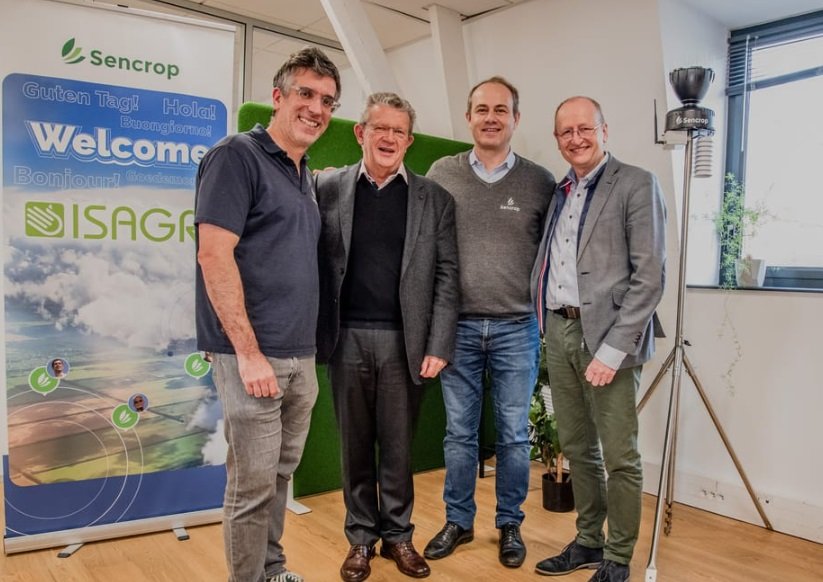
Groupe ISAGRI, a European company in digital solutions for agriculture, has acquired Sencrop, an agtech company specialising in agricultural weather and irrigation solutions.
The companies said the acquisition moves Sencrop from a ‘start-up’ company to being part of a family-owned, independent agri-service structure.
“For existing users, very little will change,” said Michaël Bruniaux, co-founder of Sencrop. “Our weather stations and app will continue to function as normal. But in the longer term, farmers will benefit from the synergies of our two businesses.”
ISAGRI owns a smaller weather service – Météus – which will be absorbed by Sencrop. In addition, it owns Landmark Systems, which specialises in farm and estate management software in the UK.
“By integrating Sencrop, Groupe ISAGRI is strengthening its position with a European ag-tech nugget that shares its DNA of innovation, technological excellence, quality and customer service,” says Pascal Chevallier, managing director at ISAGRI.
He added the deal fits in with ISAGRI's Horizon 2028 project, which aims to make the company a global technological leader in connected agriculture. ●
Left to right:Mickaël Bruniaux,Sencrop founder; Jean-Marie Savalle, president, Isagri Group founder; Martin Ducroquet,
Sencrop founder; Pascal Chevalier, Isagri Group CEO.