Gaurav Sahay
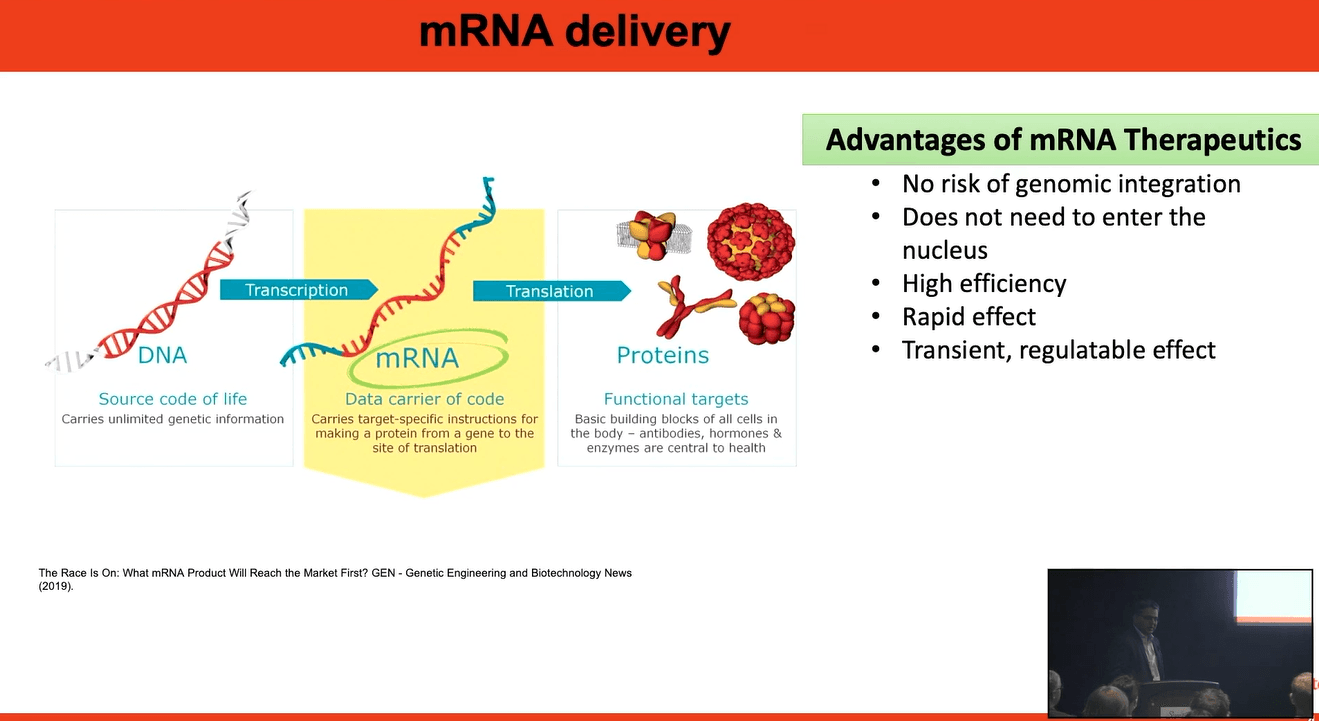
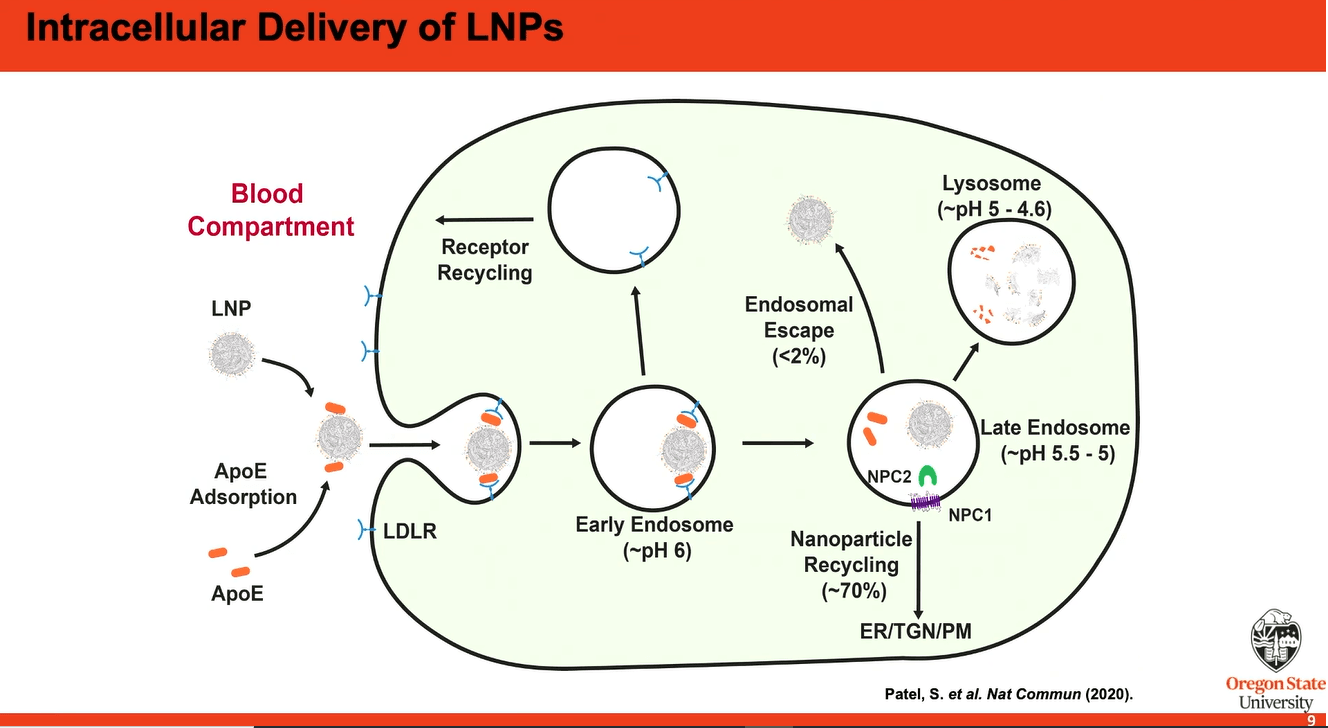
Mr. Sahay started his talk by explaining that that one of the key components of mRNA vaccines is ionizable lipids. PEGs DSPCs and cholesterol are also common but the ionizable lipids gave better results regarding endosomal escape efficiency. Although they performed better in vitro settings, only a few of lipid nanoparticles (LNPs) work in vivo. Intracellular delivery of LNPs is complicated, but one of Mr. Sahay’s previous studies indicated that a cholesterol transporter named NPC1 would efflux these particles which is a rate limiting step. Since cholesterol transport is relevant to these particles, so they tried different cholesterol analogs to enhance payload delivery as supporting agents for ionizable lipids to improve ionizability. Among several cholesterol analogs, they figured out that β-sitosterol which has C24 alkyl chain made 100-200-fold improvement depending on the cell type being used for transfection. Cryo-EM images showed that the polyhedral shapes were formed when they utilized C24 alkyl derivate analogs and this might affect the interaction and help ionizable lipid to become more fusogenic with endosomal membrane.
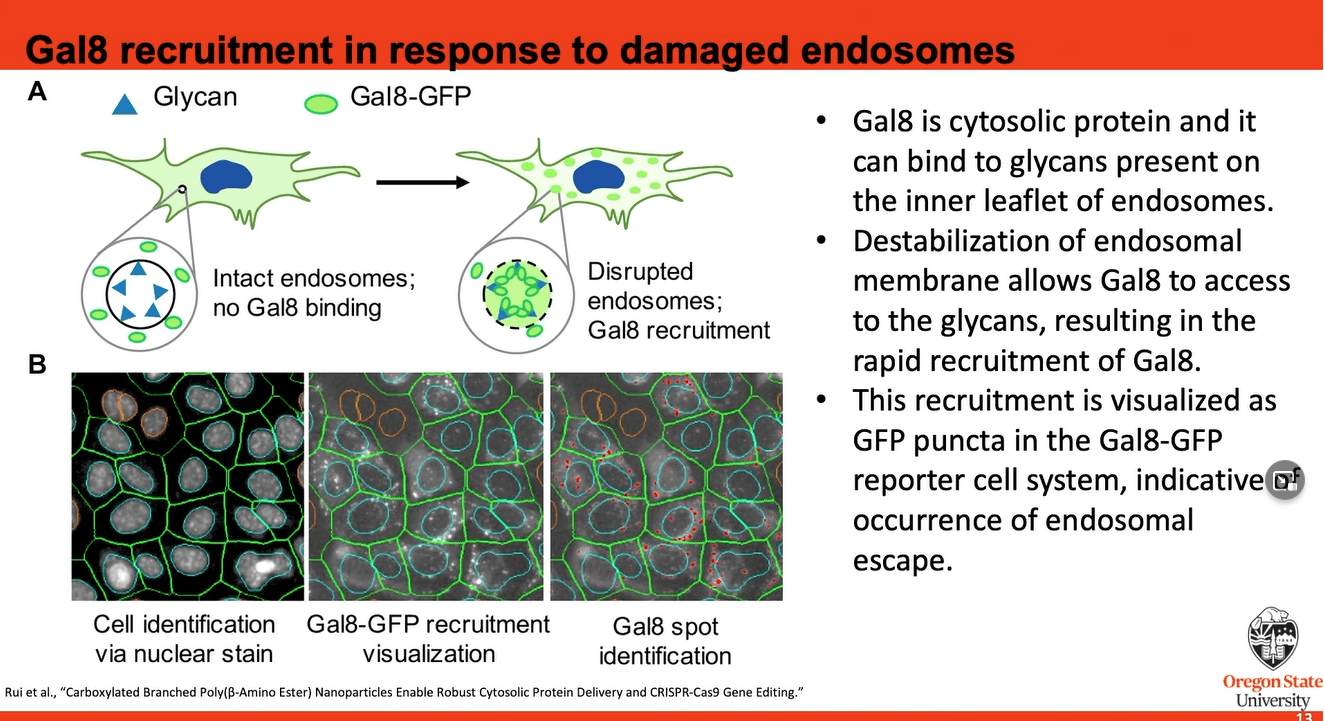
They also conducted particle internalization assays using labeled RNA indicating that LNPs containing sitosterol were moving at much faster rate inside the cells, so these LNPs might escape the endosome or be in a more permeable environment. Mr. Sahay also showed the data coming from live-cell imaging assay using Gal8-GFP fusion indicating that the occurrence of endosomal escape which is normally a rare event increased whey LNPs containing sitosterol.
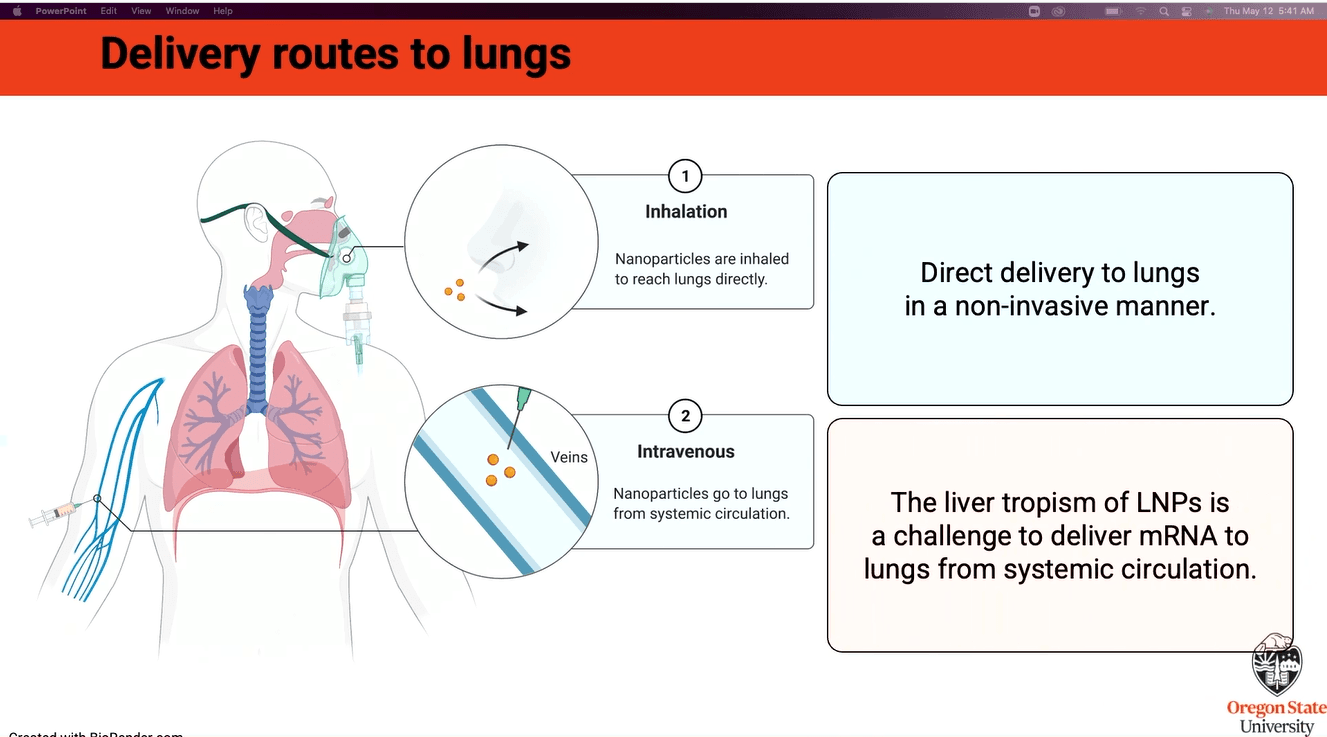
Regarding delivery routes, direct delivery to lung through inhalation is both non-invasive and exhibits less liver tropism. One of the challenges of the development of inhalable LNPs via nebulizer is that because of the shear stress, aggregation of LNPs and loss of encapsulation take place. To achieve effective and safe delivery, PEG addition could be useful. Another reason for adding PEG is its ability to pass through the mucus layer which is helpful in targeting diseases such as cyctic fibrosis. Addition of more PEG caused a decrease in LNP size and transfection efficiency was reduced upon the increased stability of particles PEGylated. To improve transfection efficiency and LNP delivery, they conducted studies by replacing cholesterol with β-sitosterol which improved gene transfection within cells even after nebulization. They demonstrated that high PEG enhanced LNP delivery by passing through mucus while LNPs remained stuck inside the mucosal environment in case of lower PEG. Mr. Sahay continued his talk by focusing on their studies related with cystic fibrosis (CF). They used Cre-lox reporter mouse (Ai9) to selectively transfect certain cell types such as bronchial epithelial cells which are the key cells to target in CF. For CF, they delivered CFTR RNA together with the ENaC mRNA to rescue CTFR knockout system.
Mr.Sahay touched upon the device they developed for nebulization. LNP-mRNA aerosolized by this device does not exhibit nebulizer associated damage, aggregation or loss of activity. While the device did not change the particle size and formulation of LNPs, it resulted in better performances in gene transfection as compared to the conventional vibrating mesch nebulizers.
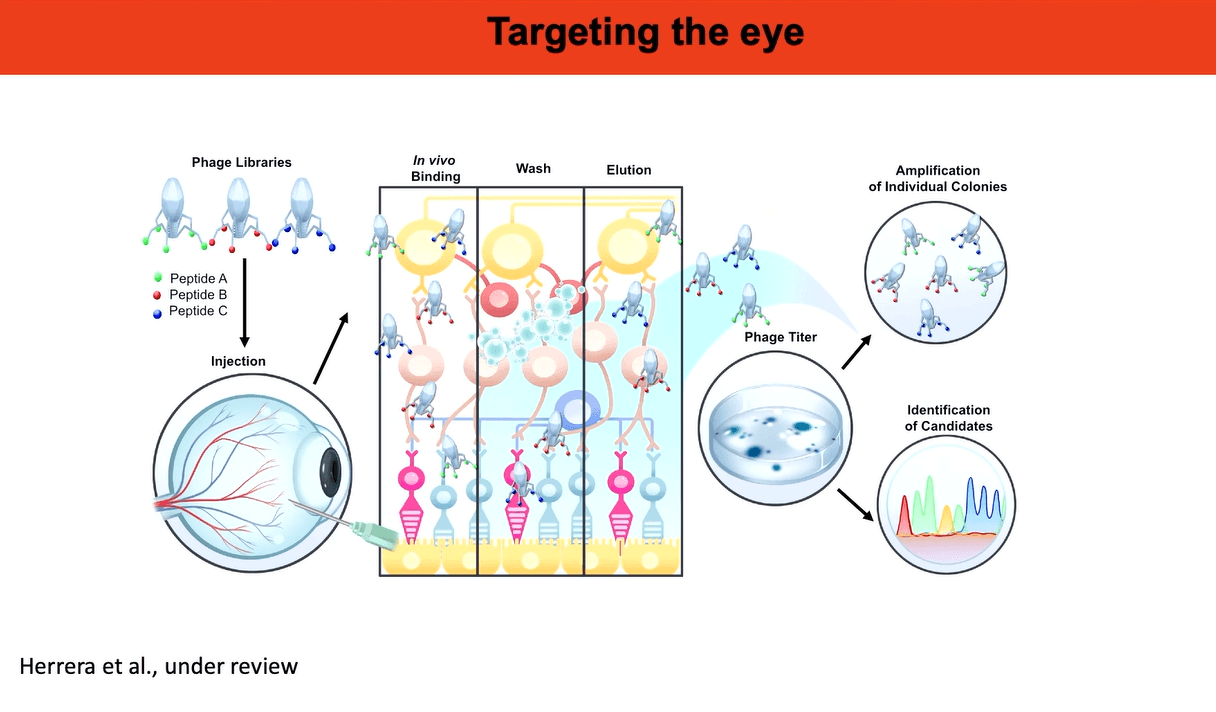
To demonstrate other possible applications, Mr. Sahay shared data for targetting SARS-CoV-2 and inherited retinal diseases (IRDs). They engineered an ACE2 mRNA without transmembrane domain and conducted pseudovirus assays indicating that LNP-sitosterol/hsACE2 had the potential to block the virus in vivo. He also explained the difficulties of drug delivery to the back of eye. There are some AAV-based products but AAVs cannot carry large genes such as the ones encoding endonucleases. In case of traditional LNPs, Retinal pigment epithelium (RPE) takes them up mostly and it is hard to reach photoreceptors. Intravitreal injection also results in LNPs that are stuck outside. To overcome these issues, they utilized phage display libraries to identify different peptides that could bring these phages to the back of eye. They took some of those peptides and put them onto the surface of LNPs. Intravitreal injections showed that LNPs coated with ligands started to move accross and reached to the back of the eye while subretinal injection also resulted in the LNPs passing RPE. Using a non-human primate (NHP) they demonstrated a distribution of these particles and demonstrated the transfection in the photoreceptors which could not be achieved with typical LNPs.
In conclusion, Mr. Sahay underscored the importance of extrahepatic delivery and localized delivery strategies. Commonly used intravenous approach mostly ends up with delivery into liver. One can do some directed evolution studies for the next generation LNPs and identify new materials with unique characteristics to achieve efficient targeting and cell type specificity. Use of DNA barcoding strategies are also important considering tracking purposes and hightroughput in vivo screening.